- info@mashrabechisht.com
- Khwaja Chowk, Ajmer, Rajasthan

- Sunrise At: 06:18
- Sunset At: 18:34
- Let’s Talk +91 8094583786

Mashaikhs Profile
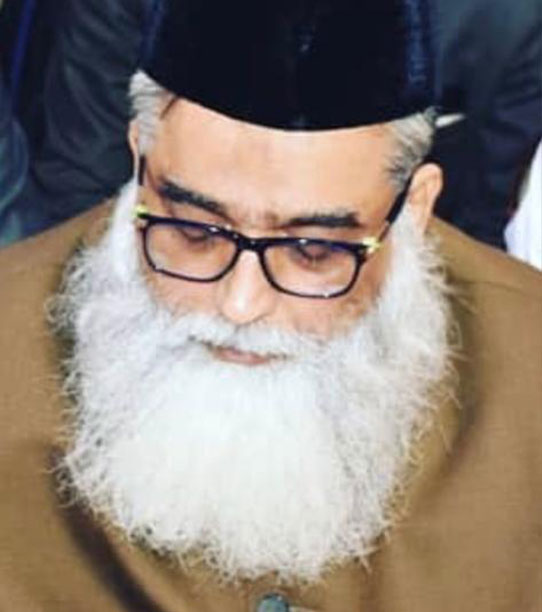
Hazrath Khwaja Faridul Mashaikh Pir Syed Faridul Hassan Chishti رضي الله عنه
A son was born in the year 1381 A.H. to the noble Gardezi Sadaat family. Emerging from the courtyard of Syed Khairatul Hasan رضي الله عنه, the sacred ancestral home in Ajmer, this little star rapidly ascended to become the beacon of light for the nation of India. This is not a tale of an ordinary individual, but rather the remarkable story of Faridul Hasan رضي الله عنه – the shining silver star among the Ajmer Gardezi sadaat. He embodied the light of truth and the guiding force along the challenging path, a genuine hero adept at problem-solving who obliterated the veil of denial. In a time when negative discourse about the Sahabahs began to circulate among the people of Ajmer, it was this exceptional man who courageously countered their words and silenced their criticism.
Birth
Faridul Masaikh Hazrat Allama pir Syed Faridul Hasan Chishti رضي الله عنه came into this world on the 21st of Dhul Hijjah, 1381 Hijra (1962). In those times, the custom of giving birth in hospitals, as we see today, was non-existent. Back then, particularly in places like Uttar Pradesh, the responsibility of childbirth and related matters fell upon the unprivileged, impoverished women from lower strata of society. These women were often not afforded the luxury of proper hygiene or even the basic comforts for their meals.
Contrastingly, by the immense grace of Allah, the birth of Faridul Hasan رضي الله عنه, along with all subsequent milestones, was meticulously overseen by the blessed hands of his own grandmother . Thus, his journey in this worldly life commenced within the sanctity of his mother's womb, guided by the benevolent touch of his father. This protection ensured that he remained untouched by the perils that could have arisen from less careful circumstances.Family Lineage
Faridul Hasan's رضي الله عنه lineage traces its connection to the Prophet ﷺ through Khwaja Fakhruddin gardezi رضي الله عنه. He is the son of Khwaja Syed Hayatul Hasan, who in turn is the son of Khwaja Syed Khairatul Hasan, and so on. The lineage further extends through Khwaja syed Noor Muhammad, Khwaja Syed shaor Ali, Khwaja Syed Wilayat Ali, Khwaja Syed Sifat Ali, Khwaja Syed Ameer Ali, Khwaja Syed Hasan Ali, Khwaja Syed Muhammad Tahir Syed Badiuddin Baddha, Khwaja Syed Jalal, Khwaja Syed Wajihuddin, Khaja Syed Abdul Qadr, Khaja Syed Hasan, Khaja Syed Ishaq, Khaja Syed Yakub, Khaja Syed Idris, Khaja Syed Mahbub Ahmad, Khaja Syed Rafiuddin Bahlul, Khaja Syed Wahiduddin, Khaja Raliuddin (Maulana Masood), Khaja Fahhruddin Gardesi, Khaja Syed Ahmad, Khaja Syed Shah Swadruddin, Khaja Syed Shah Nizamuddin, and finally Khaja Syed Haja Abul Qasim Syed Jamaluddin Hussain, who is connected to Syed Imam Musa Al-Qadim, Imam Jafar As-Sadiq, Imam Muhammad Al-Baqir, Imam Ali Zainul Abidin, Imam Hussain, and ultimately to Aliyib Abitwalib and Syedath Fatimah رضي الله عنهم أجمعين Faridul Hasan’s رضي الله عنه lineage is deeply intertwined with the Husseini Sadaat lineage, extending through both maternal and paternal lines. On his mother's side, his lineage can be traced as follows: he is the descendant of Syed Kafia Bewi, daughter of Syed Hussain Ali, who is the son of Syed Muhammad Ali. This line continues with Syed Qasim Ali, Syed Amanat Ali, Syed Khidmat Ali, and Syed Laal Muhammad, leading back to Syed Abdur Rasheed. This dual lineage from both maternal and paternal sides further establishes his connection to the Husseini Sadat lineage.Education
As Faridul Hasan رضي الله عنه matured, his grandfather Khairatul Hasan رضي الله عنه presented him with his first letter, inscribed with the Quranic words "Bismillah." His father devoted significant attention to his education and upbringing, leaving no aspect of knowledge and discipline untouched. He emerged as an exceptional prodigy of his time, possessing profound knowledge and exemplary manners that were renowned near and far. This reputation drew scholars and mentors from the Ajmer region to seek his presence. Guided by the prayers and aspirations of his devoted father and paternal grandfather, he earnestly sought to be illuminated with knowledge from the scholars of the past. These supplications and his dedication paved the way for him to develop into a charismatic figure, enriched by his disciplined approach to life.Body Structure
He possessed medium-length curly hair that fell between not too long and not too short. His forehead was broad, and his jaws came together harmoniously. He had a long nose and medium-sized, endearing ears. His teeth were exceptionally shiny and attractive, complemented by a curled beard. With a broad chest and a somewhat plump abdomen, he stood six feet tall. His nails were well-maintained and gleaming white, while his hands were round and sturdy, with firm fists and long fingers. His neck resembled that of a Yaman Kooja, and he boasted a melodious, high-pitched voice. His feet were elongated, and his eyelashes were of medium length. His lips, neither thick nor thin, were a vibrant shade of red. His face had a flush, and his complexion was wheatish. His striking red eyes held a captivating beauty. Such was the physique that had the power to dazzle anyone who beheld him.Education and Upbringing
The role of his father in the success of Faridul Masaikh’s رضي الله عنه life is indispensable. Along with imparting sound knowledge, his father consistently took him to the gatherings of great saints and sought their prayers for his future. Moreover, his revered grandfather, Khairatul Hasan رضي الله عنه, once entrusted the infant—while still in his father’s arms—into the blessed hands of his grandmother, declaring with conviction: “This child must grow into a consummate scholar of religion.” This noble wish was lovingly carried forward and upheld through successive generations. He imbibed the sweetness of knowledge imparted by numerous eminent scholars. Among them was Hazrat Baba Kanthari رضي الله عنه, under whose guidance he underwent years of rigorous training, beginning from his early education. He gave equal importance to both religious and worldly learning, ensuring that his understanding remained balanced and complete. In addition to this, he inherited ijazah (spiritual authorizations) and invaluable knowledge from his father and paternal grandfather, thereby strengthening his foundation in both scholarship and spiritual discipline.Marriage
The blessed marriage of Faridul Masaikh رضي الله عنه took place on the 29th of April, 1995, under the guidance of Mushahide Millat, the noble grandson of Ala Hazrat Ahmad Raza Khan رضي الله عنه. The union was solemnized at his residence in Ajmer with Sayyidah Tarannum Fatimah, the beloved daughter of the distinguished scholar and Sufi saint, Sayyid Naseeruddin Niyazi رضي الله عنه. Her noble lineage extends through Khwaja Sayyid Mootha رضي الله عنه, reaching up to Khwaja Fakhruddin Gardezi رضي الله عنه. Owing to this sacred ancestry, her family has long been known with reverence as “Aale Gardez Patti Pahadi Pana mudah” The lineage of Sayyidah Tarannum Fatimah is recorded as follows: Sayyidah Tarannum Fatimah bint Sayyid Naseeruddin Niyazi bin Khwaja Sayyid Fakhruddin bin Khwaja Sayyid Jamaluddin bin Khwaja Sayyid Sharafuddin bin Khwaja Sayyid Ameer Ali bin Khwaja Sayyid Sa’adat Ali bin Sayyid Ameerullah bin Khwaja Sayyid Shukrullah Sikhan bin Khwaja Sayyid Jamal Muhammad bin Khwaja Sayyid Ghulam Muhammad bin Khwaja Sayyid Nathu bin Khwaja Sayyid Hasan bin Sayyid Alam—through Khwaja Sayyid Mootha رضي الله عنه—leading to Khwaja Fakhruddin Gardezi رضي الله عنه. From this sacred marriage, Allah blessed them with three children: two sons, Syed Hammadul Hasan Chishti and Syed Hasanul Hasan Chishti, and one daughter, Syedath Fizza Fatimah.Khilafat and Ijazah
Faridul Masaikh رضي الله عنه inherited the Ijazah (authorizations) and Khilafat (spiritual succession) of the Silsila-e-Chishtiyya Mu’iniyya Fakhriyya Gardeziya through his noble forefathers, extending back to Khwaja Fakhruddin Gardezi رضي الله عنه. These authorizations and successions, preserved and safeguarded across generations, reached him through this blessed chain and continue to remain alive in his legacy. Among the sons of his father, Khwaja Hayatul Hasan رضي الله عنه, it was Faridul Masaikh رضي الله عنه who upheld the dignity of his father’s name and reputation, faithfully continuing his religious services and noble traditions. Along with the inherited Ijazah and Khilafat, he also desired to pledge his spiritual allegiance (bay‘ah) directly to his father for spiritual training. However, his father declined, remarking: “That which has been destined for you lies with someone else.” Instead, his father conferred upon him only a portion of the Ijazah that had been granted earlier by his own father, Khairatul Hasan رضي الله عنه. Despite repeatedly requesting his father to accept him formally as a disciple and guide him on the spiritual path, his appeals were gently declined. It was during this time that Mushahid Raza, the noble grandson of Ala Hazrat Ahmad Raza Khan رضي الله عنه, arrived in Ajmer. Recognizing the opportunity, Khwaja Hayatul Hasan رضي الله عنه requested him to take his beloved son under his spiritual training. Out of humility, Mushahid Raza at first declined, saying: “You are our elder; how could it befit me to take charge while being in your presence?” Later, however, upon being invited to the Khanqah and earnestly urged by Khwaja Hayatul Hasan رضي الله عنه, Mushahid Raza consented. In the year 1982, he entrusted Faridul Masaikh رضي الله عنه with his complete chain of spiritual authorizations and successions, documented in the distinguished manuscript “Al-Noor wal-Bahaa fi Ijaza Awliya’ Allah.” Through this blessed transmission, Faridul Masaikh رضي الله عنه received Khilafat in multiple Sufi orders:- • Chishtiya Moiniyah fakhriyah
- • Chishtiya Sabiriya
- • Chishtiya Nizamiya Barakatiya Rizviya Hashmatiya
- • Qadiriya Muammariyah Rizviyah Hashmatiya
Demise
Faridul Masaikh رضي الله عنه had long prepared himself for his eventual departure from this world. In his final days, he entrusted all responsibilities—spiritual authorizations, adhkars, and matters of the household—to his elder son, Syed Hammadul Hasan, and ensured that he carried them out by his side. Nearly ten days before his passing, he began reciting regularly the supplication:اللهم يا جامع الناس ليوم لا ريب فيه اجمعني به وعليه وفيه
During his last days in the hospital, he would often increase in the following prayer:
بسم الله كهيعص كفيت فسيكفيكم الله وهو السميع العليم
بسم الله حم عسق وحميت فالله خير الحافظ وهو ارحم الراحمين