Passing into the Realm of Divine Beauty
After settling in Ajmer, Khwaja Gharib Nawaz رضي الله عنه devoted his life entirely to guiding people with love, humility, and wisdom. He married Bibi Ummatullah رضي الله عنها, the daughter of Syed Wajihuddin Mashhadi, and together they were blessed with children who carried forward his noble legacy.
His khanqah in Ajmer became a center of light and compassion where the poor, the distressed, and the seekers of truth found peace and guidance. He welcomed people of all backgrounds—Muslims and non-Muslims alike—offering food, knowledge, and spiritual counsel without discrimination. His travels also took him to Delhi, where his presence and teachings influenced many, laying the foundation for the Chishti order to spread across the Indian subcontinent.
Khwaja Garib Nawaz رضي الله عنه’s life was a living embodiment of the Qur’anic message of mercy. Through his prayers, service, and unmatched generosity, thousands turned towards the path of Islam.
In 633 Hijri, (1236 CE) Mid-night of 6th Rajab, after a life of devotion and sacrifice, Khwaja Gharib Nawaz رضي الله عنه passed into the Realm of Divine Beauty in Ajmer. At the time of his departure from this world, a miraculous sign appeared on his radiant forehead:
هٰذا حبيبُ اللهِ، ماتَ في حبِّ الله
“This is the Beloved of Allah, who passed away in the love of Allah.”
This divine inscription testified to his entire life’s mission — living and serving purely for the love of Allah.
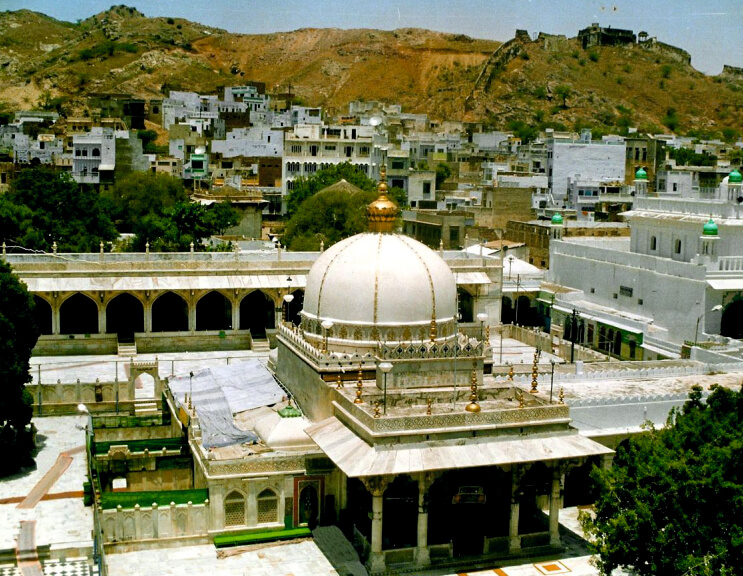
Today, his blessed shrine, the Dargah Sharif in Ajmer, remains one of the greatest spiritual sanctuaries in the world. Millions—irrespective of religion, caste, or creed—continue to seek his blessings and inspiration there. His message of love, unity, and service echoes eternally, making him truly the Sultan-ul-Hind, the spiritual king of India.